
Homepage Mesmer in UK
In Search for Gothic Magic
The 200th anniversary of Mary Shelley’s Frankenstein offers the occasion to meditate on the rather unexplored connections between Stage Magic and Literature, focusing on the reciprocal influence between magicians and novelists during the Gothic period. After the participation to the Mesmerized! series of events (5-12 May 2017) held at the University of Warwick, the Mesmer Project is back to the UK to inject a touch of wonder to a literary Halloween celebration.
At the core of the Gothic lies the representation of a conflict: the one between an enchanted Past, a lost world peopled by inexplicable and disquieting phenomena, and the Present dominated by Enlightenment, trying to destroy that world. Started in 1764 as a literary genre with The Castle of Otranto by Horace Walpole, its themes have soon been translated into other media. In five years it conquered the theatrical stages with The Mysterious Mother (1769), a Gothic drama by Walpole himself. The 20th century saw the birth of Gothic movies in the 1930s and Gothic rock at the end of the 1960s. Today we are used to expressions like Gothic comic books, video games and TV series, but not so familiar with a theatrical context in which Gothic topics had been translated in a very peculiar way: the underground and rather unexplored world of Stage Magic.
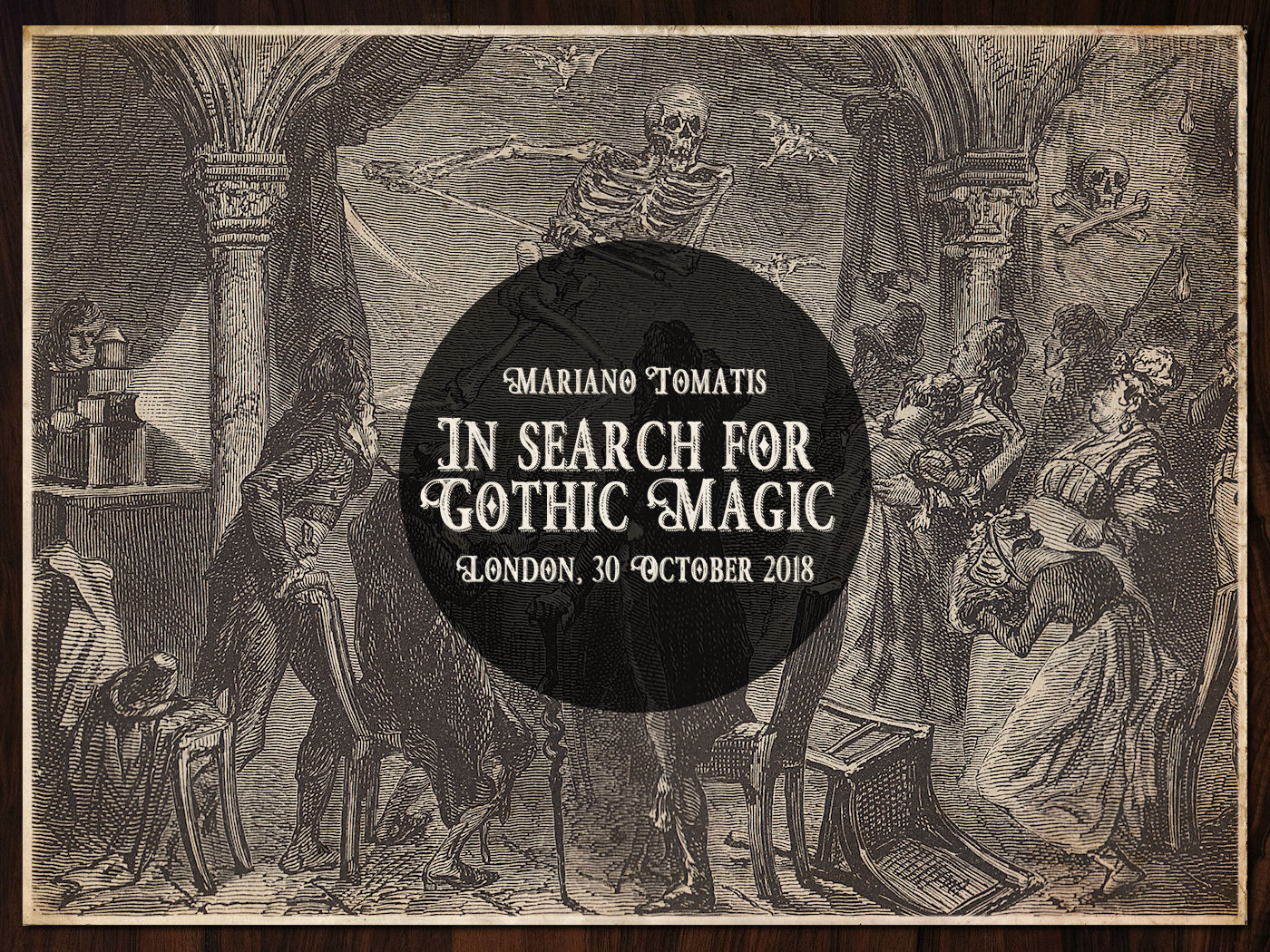
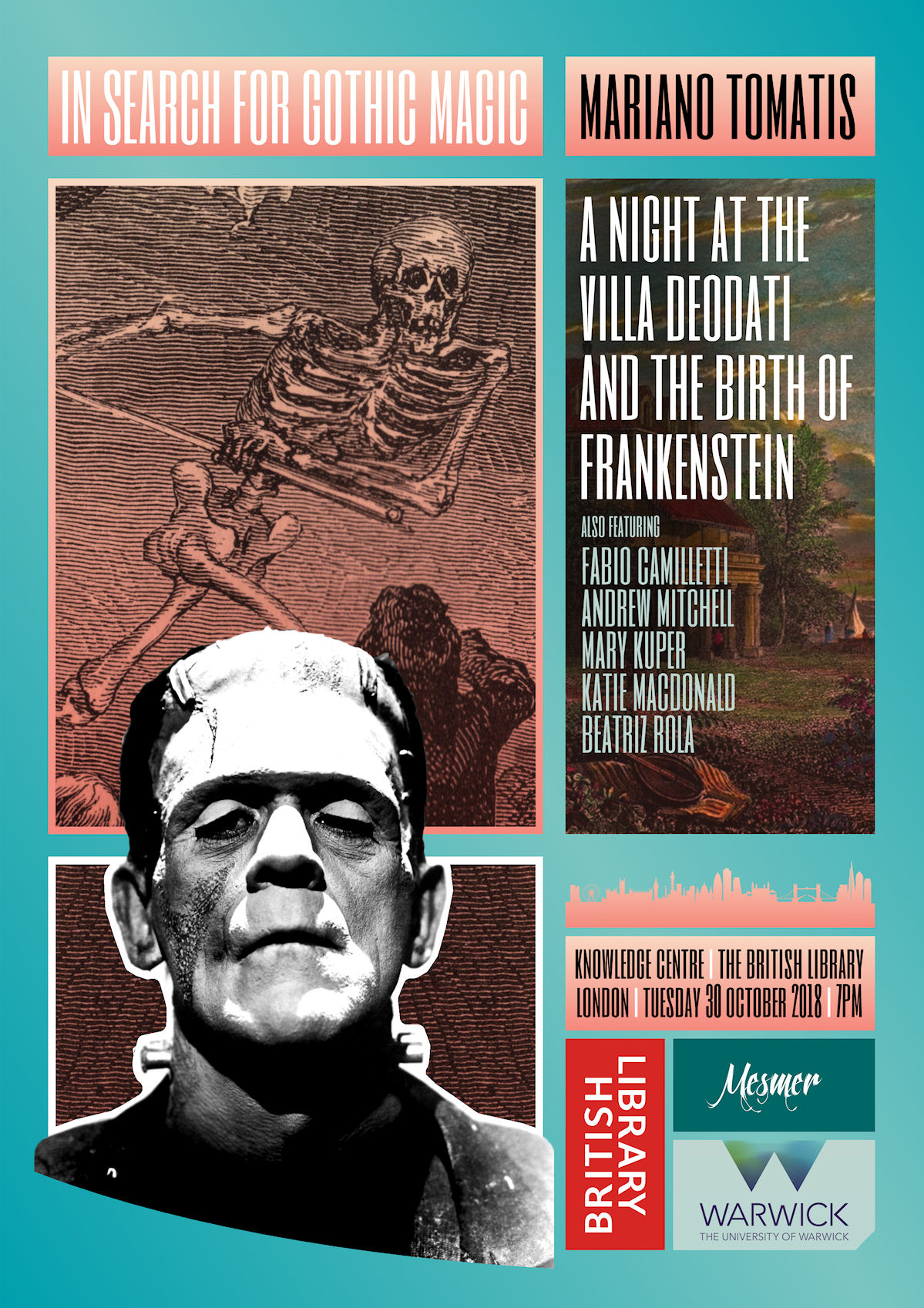
Forget about the fluffy-bunny magic for kids: on Tuesday 30 October 2018 at 7PM in the Knowledge Centre at The British Library (London) illusionist and historian of magic Mariano Tomatis will give a talk in the behalf of the event "A Night at the Villa Diodati and the Birth of Frankenstein", focusing on a specific performing art designed for adults, dating back to the middle of 18th century. In that period, some stage magicians fueled the conflict between Rationality and Irrationality by developing and staging knowingly ambiguous theatrical narratives, mixing the two ingredients of horror and mystery. From Pinetti’s Wise Little Turk to Cagliostro’s psychic scams, from Philidor’s phantasmorasi to Robertson’s phantasmagoria, Mariano will analyse the reciprocal influence of stage magicians and novelists (Walpole, Schiller, Lewis, Shelley, to name just a few...) also restaging live some theatrical translation of typical Gothic ingredients.
Horror, Enchantment, and the Genesis of Frankenstein
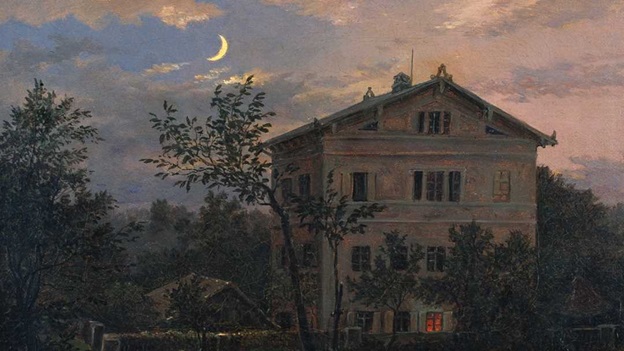
During a ‘wet, ungenial summer’ of 1816 on Lake Geneva in 1816, Percy and Mary Shelley found themselves confined for days in Villa Diodati with Lord Byron, John Polidori and Claire Clairmont. Sitting by the fireplace, the group would amuse themselves with a book of German ‘ghost stories’ translated into French and entitled Fantasmagoriana. Byron then challenged the group to write their own stories. Although Mary Shelley initially struggled for inspiration her story would become the literary masterpiece Frankenstein, published 200 years ago this year.
The event begins with an exploration of Fantasmagoriana and powerful influence it held over those readers. Through stories, research and illusion, Gothic expert Fabio Camilletti and Mariano Tomatis explore and recreate how the friends would have been affected these amazing German ghost stories and also by the spectacle of phantasmagoria, the now lost art of thrilling audiences with macabre illusions created through trickery and science. Prepare to be shocked and amazed.
The second half is devoted to a performed reading of the long poem Villa Diodati by leading British poet Andrew Mitchell, to live music accompaniment and illustrations.
The event is part of Frankenreads: An international celebration of the 200th anniversary of Mary Shelley’s Frankenstein for Halloween 2018 organized by the Keats-Shelley Association of America.